
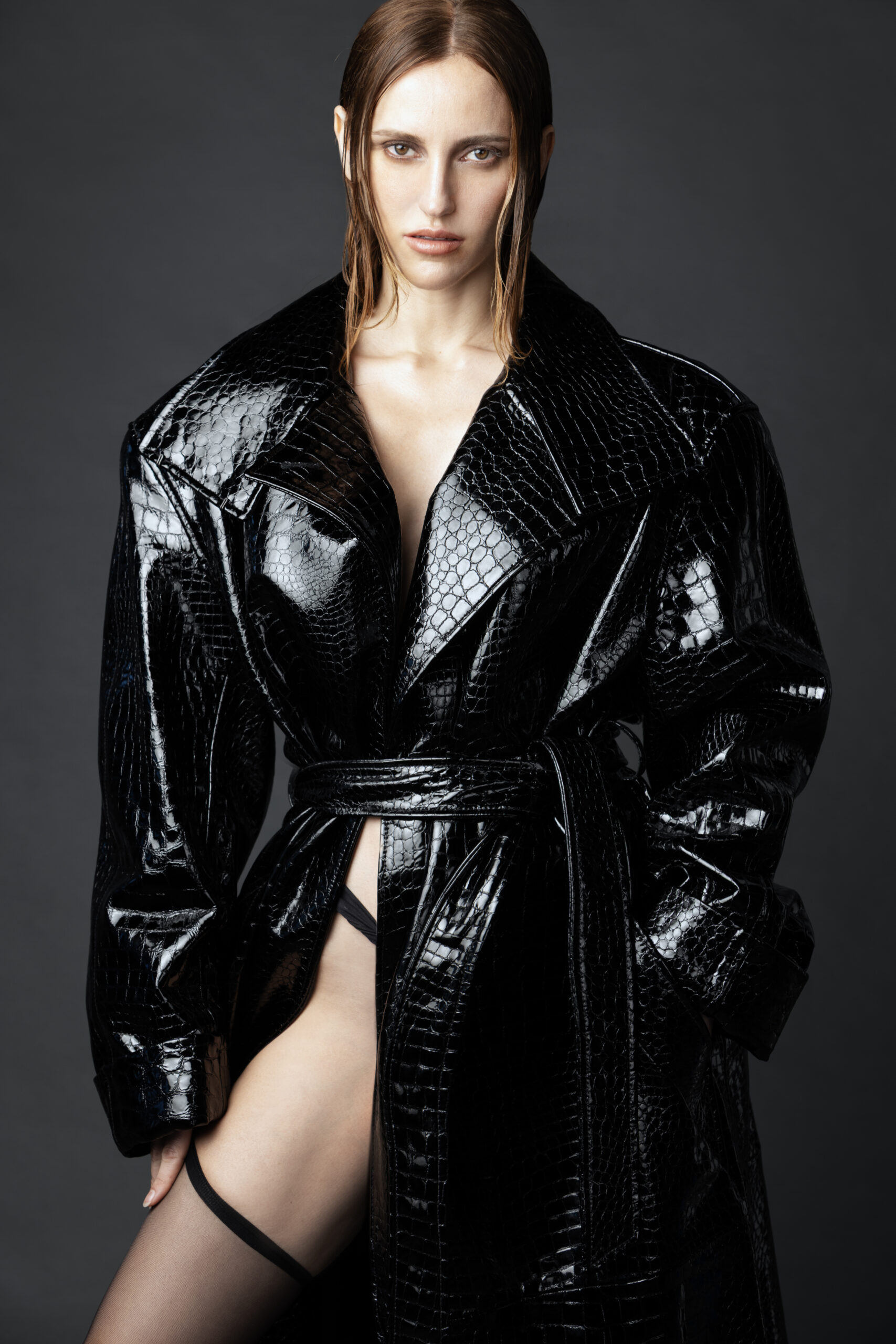
There is a certain expectation placed on models that their look, style, and even confidence should come naturally. Iuliia Bazhan disagrees. In her view, expectation shapes behaviour, and behaviour shapes outcomes.
By Kate Harton
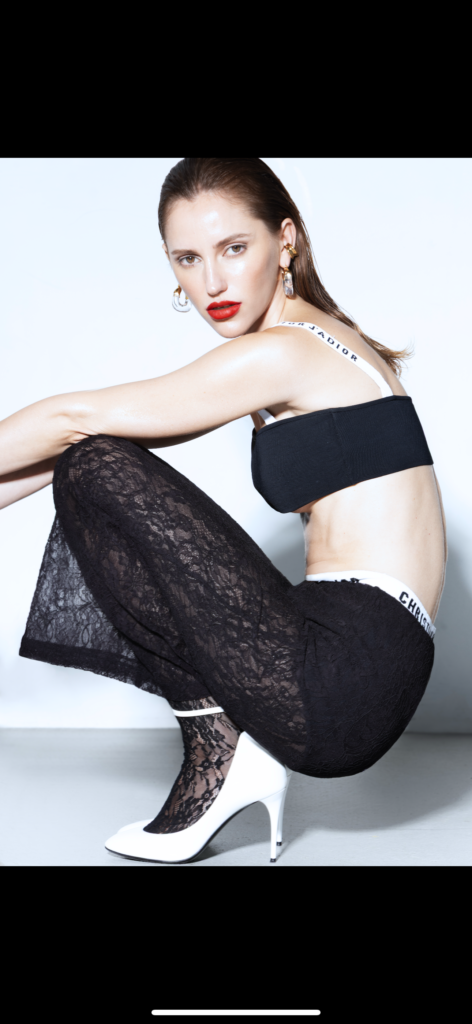
During a studio shoot in New York, wearing Dior
Iuliia Bazhan was raised in a family where expectation and discipline existed side by side.
“My lawyer father believed in me as if the outcome was already certain. My entrepreneur mother believed that everything should be built carefully and properly.”
She pauses, then adds: “I felt pressured to be a perfect kid, which probably served me well in life.”
Even her surname reflects that idea. Bazhan comes from the Ukrainian word bazhannia, meaning aspiration or deep intention. “For me, it has always been about direction and building something step by step.”
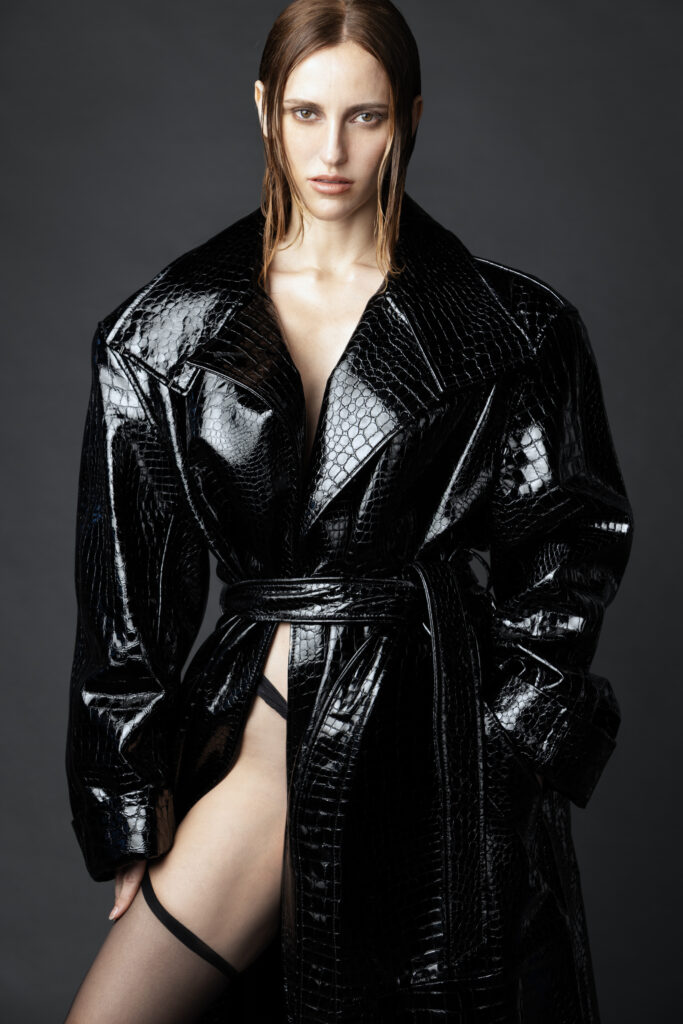
Bazhan in an editorial shoot in a black statement coat
How would you describe your modelling career today?
“In my childhood I dreamt of being a model, now it feels like not enough.” Bazhan works internationally, primarily between New York, Paris, London and Milan, in runway presentations and editorial. Her work has been featured in publications including Vogue, Harper’s Bazaar, L’Officiel, Glamour and Cosmopolitan. She has opened runway shows during Paris Fashion Week twice. “It was so much fun.”
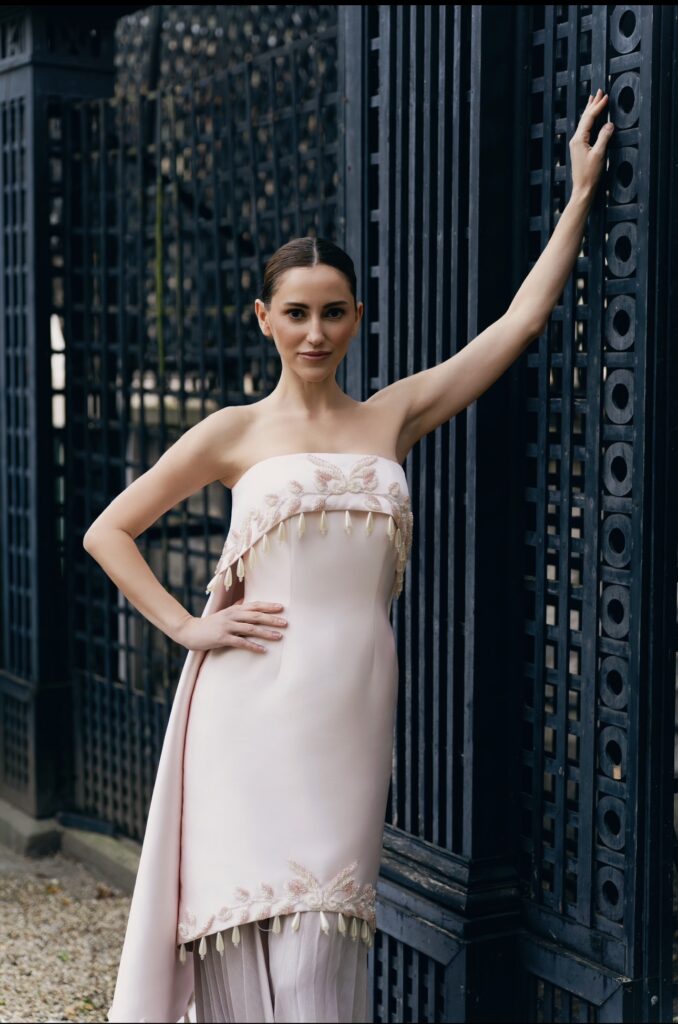
Iuliia Bazhan at Paris Fashion Week 2026
At what point did your work begin to move beyond fashion?
“Recently I saw the power of telling my story and diagnose, and how sharing it can truly help families raising autistic children. When you speak openly about challenges, rehabilitation, growth and real progress, it gives other parents hope, direction and strength to keep going.”
“As a representative of the fashion community, I want to do everything in my power to set the best possible example for those I may influence.
This is the kind of legacy I want to leave.”
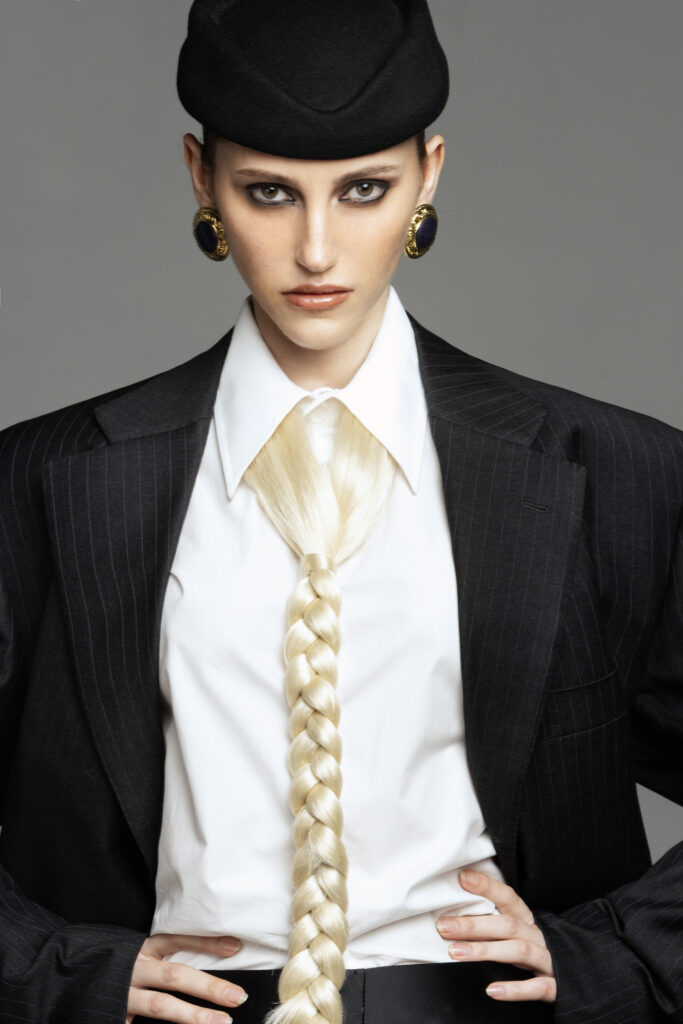
Bazhan in an editorial look featuring a Schiaparelli signature detail
You speak about expectation. What do you mean by that?
“Expectation is not neutral. It directly influences behaviour.
The way a child is perceived affects how adults respond to them, parents, teachers, systems. And over time, that shapes the trajectory of their development.”
“What I question is the idea that outcomes are fixed early. What people call impossible is often just something that hasn’t been given enough time, structure or resources yet.”
That conviction is now driving her next project: a photographic exhibition featuring real stories of successful autistic people. “I want to show real examples so that when people see them, they start thinking differently about what is actually possible.”
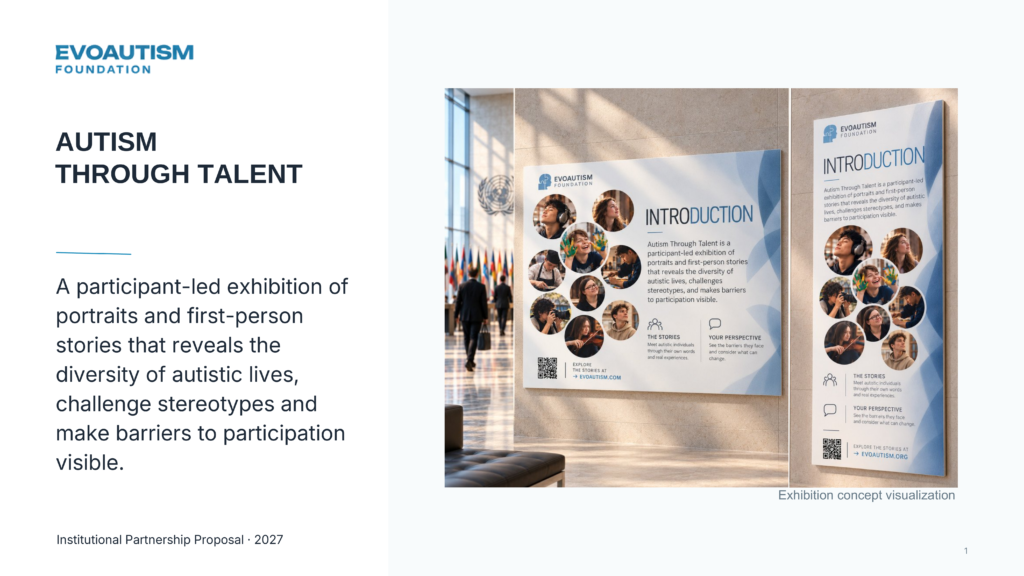
Photographic exhibition concept featuring real-life stories of accomplished autistic people
What is a common misconception about you?
“Sometimes people think I am too serious or too strict. But I am just direct and honest, so don’t hesitate to talk to me. I love conversations.”
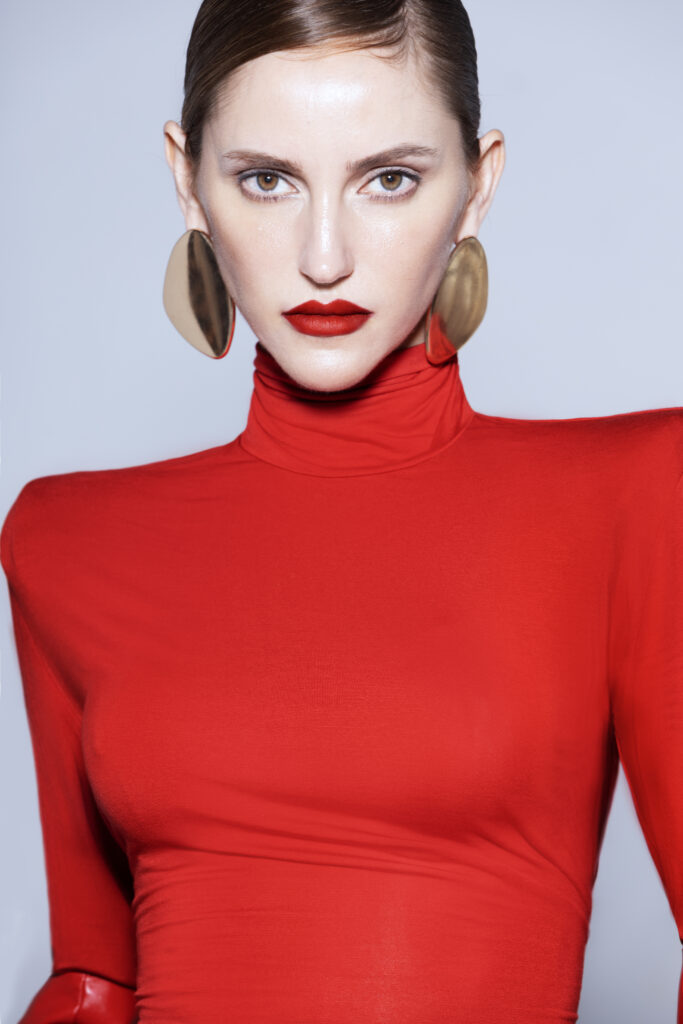
Studio portrait of Iuliia Bazhan
What would people be surprised to learn about you?
“I have a degree in computer engineering, but I’ve never figured out how to use a MacBook. I’ve been given one twice, and both times I sold it. It’s probably the most ironic thing about me.”
She also plays volleyball and badminton, and was always a stronger long-distance runner than a sprinter.
“I was probably the worst at short distances at university. But I think it reflects something about me. I’ve never been fast at the beginning, but I can go further than most.”
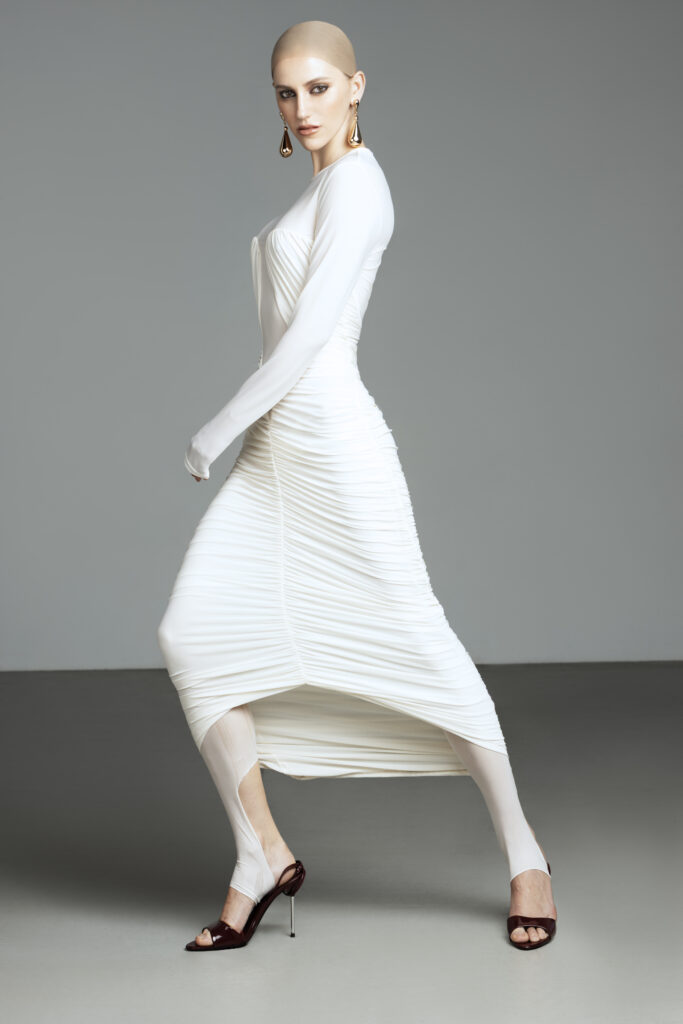
Captured in motion during a fashion editorial
She sits with that for a moment. “It becomes less about reaching a point, and more about continuing the process, because each step changes what you see next, and shapes you. There is no final version of who you are. Only the path itself.”
Credits:
Photography: Tatyana Nagaeva
Styling: Fani Polychroniou
Make-up and Hair: Sophie Hartnett
Interview: Kate Harton


